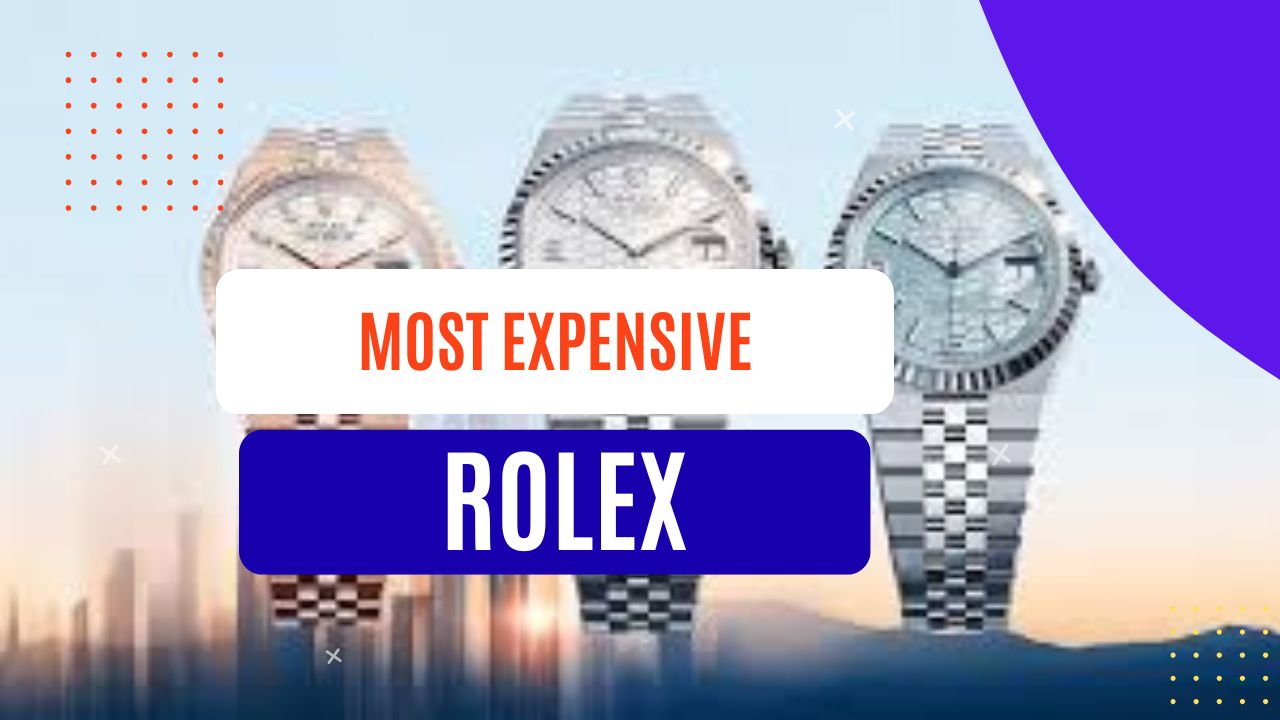
Rolex. The name alone conjures images of success, precision, and undeniable luxury. For over a century, the Swiss watchmaker has adorned the wrists of visionaries, explorers, and icons, cementing its status as the ultimate symbol of achievement. But beyond the well-known Submariners and Datejusts that populate boardrooms and country clubs, there exists a stratosphere of Rolex collecting where prices soar into the millions.
While a standard retail Rolex might cost anywhere from $5,000 to $50,000, the auction world tells a different story. Here, provenance, history, and rarity collide to create valuations that rival the GDP of small nations. Whether you are a seasoned horologist or simply curious about the heights of luxury, understanding what drives these astronomical prices offers a fascinating glimpse into the world of high-end watch collecting.
In this guide, we will explore exactly how much the most expensive Rolex watch costs, the specific models that command these figures, and the intricate factors that transform a timepiece into a multi-million dollar treasure.
What Factors Influence the Price of a Rolex?
Table of Contents
A Rolex is never “just” a watch; it is a culmination of engineering, art, and brand equity. However, the leap from a luxury retail price to a record-breaking auction hammer price depends on several specific variables.
Materials
The foundation of any luxury watch’s value lies in its raw materials. Rolex operates its own foundry, allowing them to create exclusive alloys like Everose gold—a unique pink gold that never loses its color. Models crafted from platinum or 18k gold naturally command a higher baseline price than their stainless steel counterparts due to the intrinsic value of the metal.
Gem-setting takes this a step further. Watches adorned with factory-set diamonds, sapphires, or rubies—such as the “Rainbow” Daytona—require immense skill to produce. Rolex gemologists select only the finest stones, and the setting process is meticulous, adding significant value to the final piece.
Rarity and Limited Editions
Scarcity drives desire. Unlike mass-market products, certain Rolex models are produced in incredibly limited numbers. Sometimes, this is intentional, as with special editions created for specific events or anniversaries. Other times, it is accidental—a “transitional” model produced for only a short period before a design update can become a holy grail for collectors.
When a collector knows that only a handful of examples exist in the world, the price ceiling effectively disappears.
Complications
In watchmaking, a “complication” refers to any function a watch performs beyond telling the time and date. While Rolex is famous for its robust, time-only tool watches, their more complex pieces demonstrate haute horlogerie at its finest.
Features like a dual time zone (GMT), a chronograph (stopwatch), or an annual calendar require hundreds of microscopic parts working in perfect harmony. The more complex the movement, the more skill required to assemble it, and generally, the higher the price.
Notable Expensive Rolex Models
While there is one undisputed king of the auction block, several other models consistently fetch eye-watering sums. These watches represent the pinnacle of the brand’s catalog.
Rolex Daytona
Originally designed for race car drivers, the Cosmograph Daytona has arguably become the most desirable sports watch on the planet. Its chronograph function allows drivers to measure elapsed time and calculate average speeds. Vintage Daytonas, particularly those with “exotic” dials, are the blue-chip stocks of the watch world. Even modern iterations in platinum or gold can retail for over $75,000, with market prices often doubling that figure.
Rolex Sky-Dweller
The Sky-Dweller is one of Rolex’s most complicated modern watches. Designed for global travelers, it features a dual time zone display and an annual calendar (named Saros) that automatically differentiates between 30- and 31-day months. It only needs one adjustment per year, at the end of February. Because of this mechanical complexity, typically housed in precious metals, the Sky-Dweller is one of the priciest models you can buy at retail.
Rolex Pearlmaster
The Pearlmaster is Rolex’s crowning jewelry watch. It is exclusively fashioned from precious metals—18 ct yellow, white, or Everose gold—and always adorned with gemstones. The dials, bezels, and bracelets are often paved with diamonds, sapphires, or rubies. These are not merely timepieces; they are heavy, glittering bracelets that happen to tell time. Prices for these masterpieces can easily surpass hundreds of thousands of dollars depending on the gem count and quality.
What is the Most Expensive Rolex Ever Sold?
If you want to know the absolute peak of Rolex pricing, look no further than the Paul Newman Daytona.
In October 2017, the watch world held its collective breath as a specific Rolex Daytona Ref. 6239 went up for auction at Phillips in New York. This wasn’t just any Daytona; it was the Daytona owned by legendary actor and race car driver Paul Newman.
The watch was a gift from his wife, Joanne Woodward. Worried about his safety on the racetrack, she had the case back engraved with a simple, touching message: “DRIVE CAREFULLY ME”.
Newman wore the watch faithfully for years, and it became inextricably linked with his persona. The specific dial style—an “exotic” dial with Art Deco fonts and square markers in the subdials—eventually became known simply as a “Paul Newman” dial among collectors.
The Price: The hammer finally fell at a staggering $17.8 million.
This sale shattered records, making it the most expensive Rolex ever sold and, at the time, the most expensive wristwatch ever sold at auction. The astronomical price wasn’t about gold or diamonds—the watch is made of stainless steel. It was about provenance. It was a piece of Hollywood and horological history that can never be replicated.
Are Rolex Watches a Good Investment?
Given these high-profile sales, it is natural to wonder if buying a Rolex is a sound financial strategy. The answer is nuanced.
Condition is King
For a watch to appreciate significantly, condition is paramount. Collectors look for “unpolished” cases where the original sharp edges remain intact. Original dials, hands, and bezels are crucial. A vintage Rolex that has been serviced with replacement parts often loses significant value compared to an all-original example.
Historical Significance
Watches with a story compel buyers. The Paul Newman Daytona is the ultimate example, but even watches with military provenance (like the “MilSub” made for the British Royal Navy) or those owned by other historical figures carry a premium.
Market Volatility
While Rolex watches generally hold their value better than almost any other consumer good, the market can fluctuate. The unprecedented surge in prices seen around 2020-2022 has corrected in some areas. However, long-term trends for rare, vintage pieces have historically pointed upward.
Buying a modern Rolex at retail is often an instant gain, as the “grey market” price is frequently higher than the list price due to supply shortages. However, buying at inflated secondary market prices carries risk if the market cools.
Why the World Pays Millions for Steel and Gold
The most expensive Rolex watch isn’t just a device for telling time; it is a cultural artifact. Whether it is the $17.8 million Paul Newman Daytona or a diamond-encrusted Pearlmaster, these watches represent the apex of collectibility.
The price of a Rolex is dictated by a unique alchemy of craftsmanship, scarcity, and story. For the buyer of a multi-million dollar timepiece, the cost is secondary to the privilege of owning a piece of history. While most of us may never bid on a record-breaking lot at Phillips, the fascination with these mechanical marvels costs nothing at all.